
Our Approach
Neuroaffektive Bildtransformation (NAT)
Our therapeutic approach at Kaiserufer, Neuroaffektive Bildtransformation (Neuroaffective Image Transformation), combines current neurobiological research with mindful, safe guidance. Many people find that distressing experiences can continue to affect them long after the events themselves have passed. This can be explained by the particular way emotional memories are stored in the brain. This is exactly where a neurobiologically grounded approach to treating distressing emotional memories comes in.
Distressing experiences, especially early or repeated stress and trauma, are stored in the brain not only in language but above all in emotional and body-based memory systems, including the amygdala, the hippocampus and somatosensory and visual networks. These so-called implicit memories can continue to have an effect even when the triggering event is long past. Neuroaffektive Bildtransformation (NAT) is a therapeutic approach that specifically targets these emotional memory processes.

Methodology
Three systems, one approach
Unlike purely talk-based methods, NAT deliberately makes use of the simultaneous activation of several functional brain systems:
Visual processing
Inner and outer image representations are used purposefully to make distressing patterns visible and open to transformation.
Sensorimotor systems
Purposeful hand and movement activity involves the body as a resource. Differences in motor execution are also consciously taken into account.
Emotional activation
Within a structured and safe therapeutic setting, emotions are activated and processed in a controlled way.
Neuroscientific research shows that engaging these systems in parallel increases the likelihood that emotional memory content can be destabilised and then weakened or newly integrated (Lane et al., 2015).
Areas of application
What NAT can help with
Neuroaffektive Bildtransformation (NAT) is used, among other things, for the after-effects of psychological trauma, as well as for chronic inner tension or hyperarousal. It is applied to depressive and anxiety-related symptoms as well as psychosomatic complaints. Persistent stress reactions following early relationship experiences can also be supported with this approach. NAT can be used both on its own and as a complement to other psychotherapeutic methods.
Therapeutic framework
Safety, structure, relationship
Treatment with Neuroaffektive Bildtransformation (NAT) is structured and transparent and carried out in close consultation with our clients. The intensity and pace are adjusted individually. Key prerequisites for its effectiveness are a stable therapeutic working relationship, a clearly defined therapeutic goal, the controlled management of emotional activation and ongoing professional evaluation of the therapeutic process.
The development and ongoing refinement of NAT is guided by current findings in affective neuroscience and trauma research. This includes professional training in Clinical Neurosciences and Brain Medicine as well as Understanding Depression at Harvard Medical School, and Medical Neuroscience at Duke University in the USA. In addition, there is a professional link to international trauma research through membership in the International Society for Traumatic Stress Studies (ISTSS).
Frequently asked questions
FAQ
What is Kaiserufer?
Kaiserufer is a practice for mental health in Hamburg-Rotherbaum. People in every life situation are warmly welcome here. We bring different disciplines together under one roof: psychology and body- and movement-oriented approaches work hand in hand and are tailored individually to you and your needs. In our calm, familiar atmosphere we take time for what matters to you.
Who is Kaiserufer for?
For anyone who wants to do something for themselves. You need no prescription and no diagnosis, and you are of course welcome with an existing diagnosis too, for example after a clinic stay or while waiting for a statutory therapy place. Some come because of acute struggles such as burnout, anxiety or depression, others simply want a space to find some calm. Our range is broad: psychotherapy under the German Heilpraktiker act (HPG), psychological counselling and diagnostics, talk therapy, couples counselling, art therapy, body therapy, group therapy and workshops as well as classes such as yoga, sound baths and meditation, for adults, teenagers and children. We do have one limit: in cases of acute suicidality or self-harm, a clinic is the safe place, and that is where we will refer you.
Why a self-pay practice?
As a self-pay practice, we offer you decisive advantages:
- Immediate appointments: no months-long waiting times as with statutory health insurance practices.
- Free choice of therapist: you decide who you want to work with, and you can switch at any time.
- Full discretion: nothing is reported to your health insurer.
- Maximum flexibility: we adapt appointment times, therapy duration and methods entirely to your needs.
How much does a session at Kaiserufer cost?
Our prices are transparent and fair. A therapy session is generally comparable to a qualified professional service. You are investing in your health and wellbeing. How many sessions you take is entirely up to you. You will find a current overview on our prices page.
Does health insurance cover the costs?
All our services are private-pay, including counselling, diagnostics and classes. Statutory insurers generally do not cover the costs, private and supplementary insurers often reimburse part of them. You always receive an invoice you can submit.
What happens at the first appointment?
Your first visit to Kaiserufer is a no-obligation introduction. We take the time to listen to you, understand your concerns and explore together which path is right for you. There is no pressure and no commitment. You decide at your own pace whether and how to continue.
Our Philosophy
A place where you can truly arrive
At Kaiserufer, we see each person as a whole, because body and mind are inseparably connected. With us, you are not a patient but a guest. Our rooms are deliberately designed to radiate warmth and comfort. Nothing here feels like a clinic, everything feels like a place where you can be at ease.
More about us
Our Team
The people behind Kaiserufer

Susann
Founder

Eva-Maria
Founder
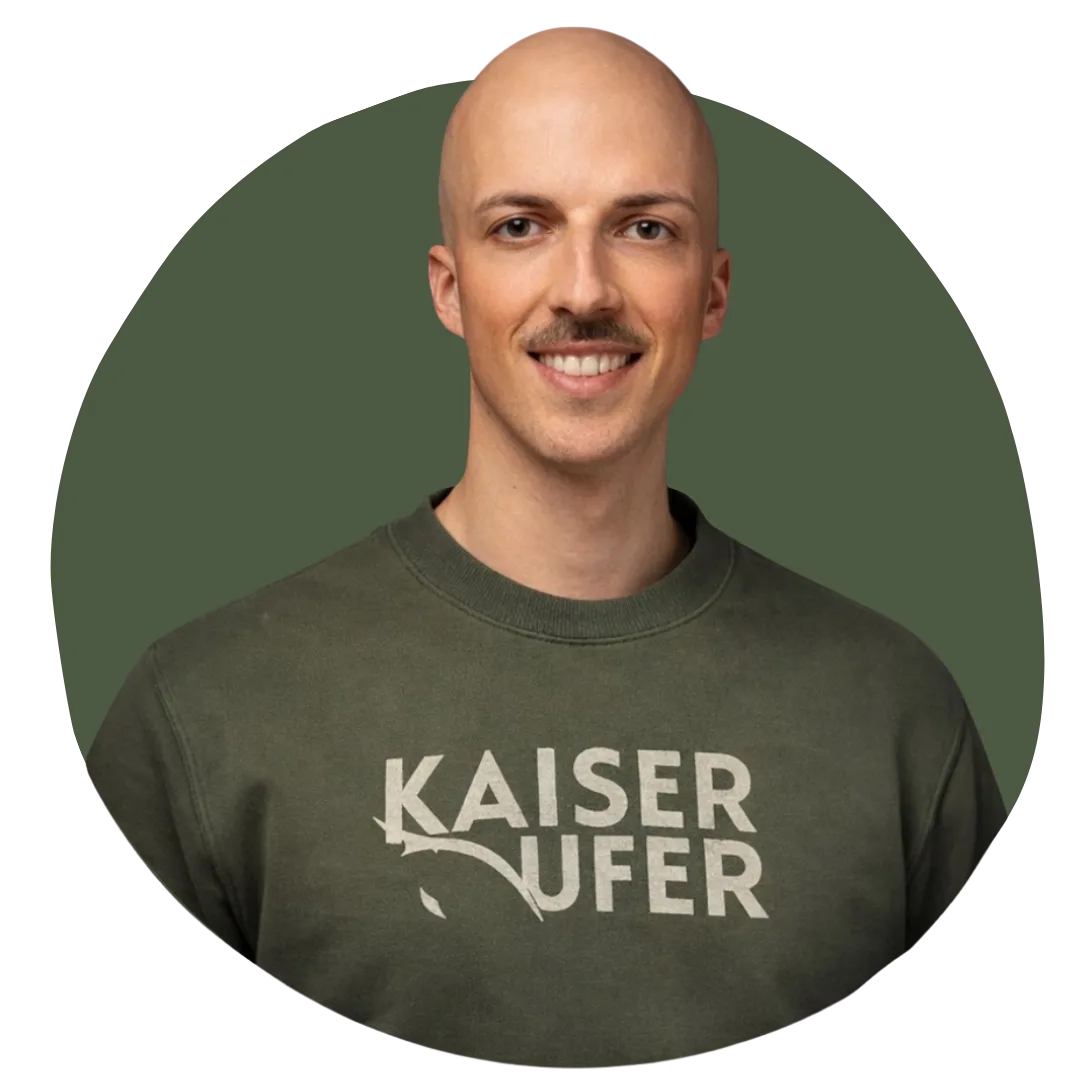
Fynn
Sports Psychologist & Practice Manager

Marlon
Psychologist

Michelle
Art Therapy

Jennifer
Body & Soul

Viann
Psychologist
How to find us
Kaiserufer Hamburg
Load map
By loading the map you accept Google's privacy policy.
Kaiserufer
Rothenbaumchaussee 5, 1st floor
20148 Hamburg
Mon to Fri: 8:00 am to 8:00 pm
Sat: classes per schedule
Phone: 040 / 368 810 83-00
Email: info@kaiserufer.de
S-Bahn Dammtor
5 min walk. Current connections in the HVV journey planner.
Bus 4, 5, 19 & 114
"Bf. Dammtor" stop, a few minutes on foot.
By car
Grindelhof car park (3 min)
By bike
StadtRAD at Dammtor.
Curious to know more?
Experience our approach in a free initial consultation. 45 minutes, no obligation, and you will feel whether it is the right fit.

How it works
You do not need to know in advance what suits you. We find that out together.
You book a free introductory session.
Online, by phone or by email, whatever you are interested in. You do not have to decide on anything yet.
We listen.
Around 45 minutes for your concern, calmly and without pressure. You share as much as you like.
We check honestly whether we can help you.
If another path suits you better, we will tell you openly.
You receive a recommendation.
We suggest which member of our team and which method we consider sensible and discuss with you how things could continue. The recommendation is non-binding, you decide.
You start at your own pace.
Single sessions or the Flossenpass, you decide how to continue. If something does not fit, we change therapist or method. That is no problem with us.

Come round for a cup of tea.
With us, you are not a patient but a guest. Our rooms are deliberately designed to radiate warmth and comfort. Nothing here feels like a clinic, everything feels like a place where you can be at ease.
The free introductory conversation takes about 45 minutes. No forms, no pressure. Simply arrive, tell us what is on your mind, and together we will see what fits.